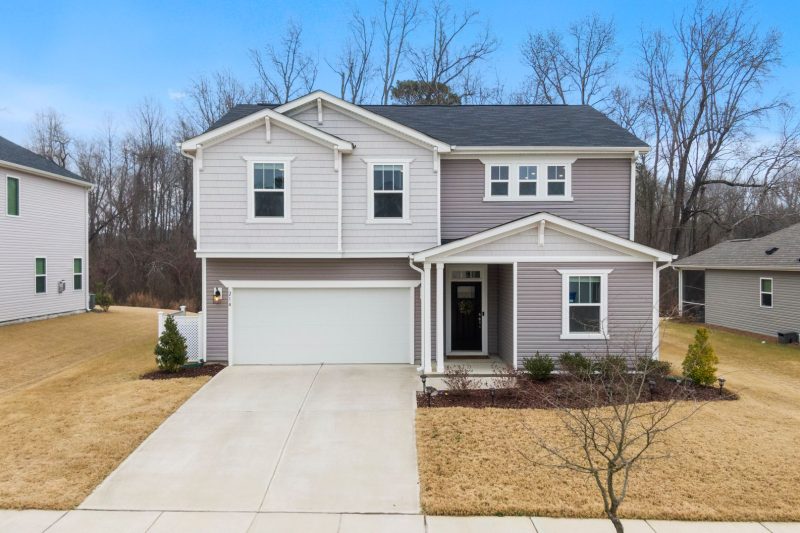
If you’ve built up equity in your Indiana home, you might be wondering what’s the…
Refinancing Your Home: When FHA Loans Make Sense for Allen County Homeowners

Thinking about refinancing but unsure if an FHA loan is the right move can leave you feeling stuck. An FHA refinance lets homeowners take advantage of government-backed mortgage features—often with more flexible qualifications than conventional options. In this article, you’ll learn exactly how FHA refinancing works, situations where it makes sense in Allen County and Northeast Indiana, and what to expect at each step.
Key Takeaways
- Purpose: FHA refinance loans help homeowners access new mortgage terms, lower payments, or use built-up equity—especially if qualifications for conventional loans are a challenge.
- Eligibility: Most often ideal for borrowers with an existing FHA loan, but options exist for those with other loan types as well; credit requirements tend to be more flexible than conventional refinancing.
- Timeline: The process typically takes several weeks from application to closing, depending on the loan type and individual scenario.
- Best For: Homeowners looking for payment relief, cash out, or easier approval, especially those with prior credit events or lower equity in their Allen County or Indiana home.
Quick Answers: FHA Refinance Basics
- Can I refinance with an FHA loan if I have less-than-perfect credit? Yes, FHA refinance loans commonly allow for lower credit scores compared to conventional loans, but meeting current program guidelines is required.
- Do I need to already have an FHA loan to qualify? No, you can refinance into an FHA loan from another loan type, though FHA Streamline refinances are only for current FHA borrowers.
- Will I need an appraisal? Often, yes—except for certain FHA Streamline refinance loans, which may not require one if specific criteria are met.
- Can I take cash out with an FHA refinance? Yes, FHA cash-out refinances allow eligible homeowners to access a portion of their home equity (subject to qualification and current guidelines).
What Is an FHA Refinance?
An FHA refinance is a government-insured loan that replaces your existing mortgage, often making monthly payments more affordable or letting you tap into your home’s equity. There are several types of FHA refinances, but all are backed by the Federal Housing Administration. This backing allows lenders to offer programs with more flexible qualification requirements compared to conventional loans, especially around credit history and equity.
Main FHA Refinance Options
- FHA Streamline Refinance: Designed for those who already have an FHA loan, this program features reduced documentation and, in many cases, may not require a new appraisal. The goal is to lower your payment or interest rate quickly.
- FHA Cash-Out Refinance: Lets you replace your current home loan with a new FHA mortgage for more than what you owe, so you can receive cash at closing. Typically requires a full credit, income, and home value review.
- FHA Simple/Rate-and-Term Refinance: Enables you to restructure your mortgage for a new rate or term without necessarily taking out cash. Can be used by homeowners moving from a conventional, VA, or USDA loan to an FHA loan.
When Does FHA Refinancing Make Sense?
FHA loans are useful for refinancing in several common local situations. Consider these scenarios typical for Fort Wayne, Allen County, and Northeast Indiana homeowners:
- You have an FHA loan and want to lower your payment or rate—the FHA Streamline Refinance is often a fast way to do it with less paperwork.
- Your credit score has dropped—since FHA guidelines tend to be more forgiving than conventional loans, refinancing may still be possible.
- You need to access home equity—an FHA cash-out refinance could provide funds for home improvements, debt consolidation, or emergencies.
- Your property value has changed—FHA guidelines around maximum loan-to-value may work in your favor if equity is limited.
- Conventional refinance wasn’t approved—but FHA might be an available fallback if you meet other requirements.
Comparing FHA Refinance with Conventional Refinance
| Feature | FHA Refinance | Conventional Refinance |
|---|---|---|
| Credit Score Flexibility | Typically more forgiving | Stricter minimums apply |
| Appraisal Requirement | Not always required (Streamline only) | Required |
| Mortgage Insurance | Upfront and monthly premiums required | Required if equity below 20% |
| Cash-Out Options | Available (subject to FHA guidelines) | Available, but stricter credit/equity rules |
| Occupancy Rules | Must be a primary residence | Primary, sometimes second/investment homes |
Types of FHA Refinance Programs
FHA Streamline Refinance
The FHA Streamline is a simplified refinance option for current FHA borrowers who want a lower payment or switch between adjustable and fixed rates. Key features include:
- Often does not require a new appraisal
- Minimal employment or income verification
- No cash-out allowed—features are designed for payment savings only
- Must show a net tangible benefit (such as lower payment or safer loan)
FHA Cash-Out Refinance
The FHA Cash-Out lets you access a portion of your home equity for any purpose, such as home improvements or debt consolidation. To qualify, you’ll typically need:
- A qualifying credit score and debt-to-income ratio (flexible, but guidelines apply)
- A current appraisal showing sufficient home value and equity
- Your home must be your primary residence
- A demonstrated ability to repay the new mortgage
FHA Simple or Rate-and-Term Refinance
This program allows homeowners to switch their existing home loan—FHA, conventional, VA, or USDA—to a new FHA loan with better terms or a different rate. No cash-out is allowed, but you can restructure to get a payment or rate that better fits your needs.
How to Qualify for FHA Refinancing in Allen County
Qualifying for an FHA refinance involves a few key steps, and program guidelines can vary based on your specific scenario. Here’s a general process for homeowners in Fort Wayne, New Haven, and throughout Allen County:
- Review your current home loan: Know your mortgage balance, rate, loan type, and payment history.
- Check recent credit activity: FHA is often more flexible, but you’ll need a clean record of on-time mortgage and debt payments.
- Estimate your home value: Especially important for cash-out, but FHA Streamline often skips a new appraisal.
- Document your income: Most FHA refinances require proof of income and employment, though Streamline may be an exception.
- Occupancy status: Your property must be your primary residence to refinance with FHA programs.
Requirements and paperwork can vary, so confirming your eligibility early with a knowledgeable local mortgage broker helps avoid surprises.
Pros and Cons: FHA Refinancing
Advantages
- Flexible credit guidelines—potentially helpful if your score dropped or you’ve had past financial issues.
- Streamlined process—often less paperwork, faster closings (especially for existing FHA loans).
- Access to cash-out options—can be easier than qualifying for conventional cash-out refinance in some cases.
Potential Downsides
- Mortgage insurance is required—upfront and monthly costs apply, even with significant equity.
- Limited to primary residences—FHA refinances cannot be used on second homes or investment properties.
- Loan limits apply—you must meet FHA maximum loan amounts for your area, which vary by county and change periodically.
Deciding whether an FHA refinance makes sense depends on your specific goals, loan type, credit, and how long you plan to stay in your home.
Steps to Start an FHA Refinance in Northeast Indiana
- Evaluate your goals: Is your priority a lower payment, cash out, or both?
- Contact a licensed Indiana mortgage broker: Begin with a pre-approval review to clarify eligibility and compare FHA vs. other loan options.
- Submit documentation: You’ll typically provide income documents, recent mortgage statements, credit authorization, and property info.
- Complete appraisal (if needed): Most cash-out and standard refinances require one, while some Streamline scenarios may not.
- Review closing details: Be sure you understand any new mortgage insurance, closing costs, and your final payment.
- Sign and close: Once everything’s approved, sign your closing documents and your new FHA loan replaces your old mortgage.
Is an FHA Refinance Right for You?
Every homeowner’s situation is different, and guidelines can change. If you’re in Allen County, Fort Wayne, or nearby communities and want to explore your refinance options, including FHA programs, let’s have a conversation. We’ll review your scenario side-by-side with conventional options and map out the next steps—whether you want to save on payments, access equity, or simply understand your choices.
Frequently Asked Questions
Is an FHA refinance worth it if I already have a conventional loan?
In some cases, yes. Borrowers who face challenges with current equity or credit could benefit from FHA’s more flexible requirements, but it’s important to compare both options—including the impact of mortgage insurance costs over time.
Do I have to pay mortgage insurance after refinancing with FHA?
Yes. FHA refinance loans require both upfront and monthly mortgage insurance premiums, at least for a minimum period—even if you have substantial equity.
How quickly can I complete an FHA refinance in Allen County?
Most FHA refinances in Northeast Indiana take several weeks from application to closing. FHA Streamline refinances may be a bit faster since they skip some steps, but every scenario is different.
Can I use FHA refinancing to remove someone from the mortgage or add a coborrower?
Yes, but it may depend on the refinance type. A full FHA cash-out or rate-and-term refinance can be used to add or remove borrowers; FHA Streamline refinances typically cannot.
Do I need to live in my home to refinance with an FHA loan?
Yes. FHA refinance programs require that the property be your primary residence at the time of closing.
This is educational and not financial advice. Loan programs and guidelines can change. Talk with a licensed mortgage professional about your specific scenario.

About the Author
Rich Galbreath
Mortgage Broker/Owner at Northstar Mortgage, Inc. · NMLS #328523
I’ve been helping borrowers purchase or refinance their homes since 1994 and have built a reputation as a trusted, professional source for residential mortgage options. Most of my clients are now repeat customers who have stayed with me for many years.
Specializes in: conventional, FHA
Licensed in: IN
Related Posts